
Google is one of the most powerful technology companies in the world, and its search engine has become an inseparable part of our daily lives. Google has made it easier than ever to discover information, whether you’re looking for instant answers or investigating complicated subjects. But what exactly is Google, and how does it work behind the scenes? Let’s explore this in detail. 1. A Brief History of Google Google was founded in September 1998 by Larry Page and Sergey Brin, two Ph.D. students at Stanford University. Their mission was simple yet ambitious: to organize the world’s information and make it universally accessible and useful. Initially, Google started as a search engine that ranked websites based on the number of links pointing to them, an algorithm called PageRank. The more relevant and trustworthy links a page had, the higher it appeared in search results. This innovation made Google stand out from other search engines at the time, such as Yahoo and AltaVista. Today, Google is a part of Alphabet Inc., a multinational technology conglomerate, and operates many services like YouTube, Gmail, Google Drive, Google Maps, and Android. However, its core product remains Google Search, used by billions worldwide. 2. What Exactly is Google? Google’s primary function is that of a **search engine, which is a tool that enables people to look up information online. Google searches through billions of online pages in its index to discover and present the most pertinent results when you put in a query. There is much more to Google than just a search engine. I It’s an entire ecosystem that includes: Google Ads—A platform for businesses to advertise their products. Google Workspace—productivity tools like Gmail, Docs, Sheets, and Drive. YouTube—the world’s largest video-sharing platform. Google Maps—For navigation and location-based searches. Android—The operating system that powers millions of smartphones. Google Cloud Services for businesses to store and manage data. All these services work together to make information accessible and provide users with seamless digital experiences. 3. How Does Google Search Work? Google Search may seem like magic, but it follows a systematic process involving three main steps: crawling, indexing, and ranking. a) Crawling** Google uses automated software called web crawlers or Google bots to discover new and updated content on the web. These bots “crawl” websites by following links and reading content. Crawling allows Google to know what new pages exist or what updates have been made to existing ones. b) Indexing Once a page is crawled, Google analyzes its content and stores it in its massive index, a digital library containing hundreds of billions of web pages. Indexing involves understanding the text, images, videos, and structure of the page. Google also notes important signals such as keywords, freshness, and usability. c) Ranking When you type a query, Google doesn’t search the web in real time. Instead, it looks through its index and uses complex algorithms to determine which results are most relevant. The ranking depends on over 200 factors, including: Relevance of content to the query, website quality, and authority Page loading speed Mobile-friendliness Freshness of content User experience (UX) 4. The Role of Algorithms Google’s algorithms are like secret recipes that determine the order of search results. These algorithms have evolved over the years to deliver more accurate and relevant results. Some famous updates include: Panda (2011): Focused on quality content. Penguin (2012): Penalized spammy backlinks. Hummingbird (2013): Enhanced comprehension of natural language. RankBrain (2015): Introduced machine learning and artificial intelligence to interpret search intent. BERT (2019): Improved comprehension of query context. These updates ensure that users get the best and most reliable information. 5. Why is Google so popular? Several factors contribute to Google’s dominance in the search engine market: Speed: It delivers results in milliseconds. Accuracy: Google interprets search intent using sophisticated algorithms and artificial intelligence. Ease of Use: Its clean, simple interface makes searching effortless. Comprehensive Coverage: Google’s index includes billions of web pages, images, videos, and more. Personalization: Results are tailored to your location, device, and previous searches. 6. How Does Google Make Money? The main source of income for Google is advertising, particularly through Google Ads. Businesses pay to display their ads on search results and across Goo Data Centers worldwide that store and process information quickly. Knowledge Graph, which connects facts and information to provide direct answers. partner network. When users click these ads, Google earns money. Other revenue sources include YouTube ads. Google Play Store (apps and games) Google Cloud services Hardware (Pixel phones, Nest devices, etc.) In 2024, advertising accounted for more than 80% of Google’s earnings, placing it among the world’s most lucrative businesses. 7. The Technology Behind Google Google uses cutting-edge technologies to deliver search results: Artificial Intelligence (AI)** and Machine Learning (ML) to understand user intent. Using Natural Language Processing (NLP) to comprehend daily language inquiries Data Concerns Worldwide*: that store and process information quickly in a knowledge graph, which connects facts and information to provide direct answers. 8 Privacy and security concerns While Google provides free services, it collects data to personalize ads and improve user experience. Google tracks location, search history, and usage habits, which raises privacy issues. To address this, users can manage their privacy settings in Google Account. Google offers options like Incognito Mode in Chrome. Data is encrypted to protect it from unauthorized access. 9. Impact of Google on Our Lives Google has revolutionized how we access information: Education: Students use it for research and learning. Business: Companies use Google Ads and Analytics to grow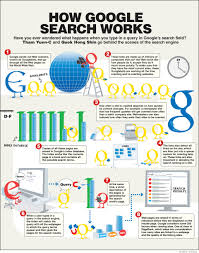 . Travel: Google Maps makes navigation easy. Entertainment: YouTube provides endless videos and music. Productivity: Gmail, Drive, and Docs streamline work and
n summary, Google is much more than just a search engine—it’s a powerful ecosystem that helps people find information, connect with others, and access tools that make daily life easier. At its core, Google works by crawling billions of web pages, storing them in its massive index, and using complex algorithms to deliver the most relevant results for a user’s search query. It analyzes factors like keywords, website quality, and user experience to ensure the information provided is accurate, timely, and useful.
Over the years, Google has evolved far beyond basic search. Gmail, Google Maps, YouTube, Google Drive, and Google Photos are just a few of the many services it now provides, all of which are connected to create a smooth online experience.. Behind the scenes, Google constantly updates its algorithms to improve accuracy, fight spam, and personalize results based on location, device, and user preferences.
The combination of vast data resources, advanced technology, and user-focused innovation is what makes Google the world’s most trusted information gateway. Whether you’re looking for quick answers, planning a trip, learning something new, or running a business, Google’s tools and services work together to make information more accessible and life more efficient for everyone.