"Rank Higher, Grow Faster – Trusted SEO by Technical Growth!"
Unlock the true power of your website with cutting-edge SEO strategies that drive real results. From boosting your Google rankings to increasing organic traffic, our expert team ensures your business gets seen by the right audience. We blend smart keyword research, technical optimization, and content that converts – all designed to grow your visibility and leads. Let your brand shine on search engines with SEO that works!
Here are the three main types of SEO commonly used in digital marketing:
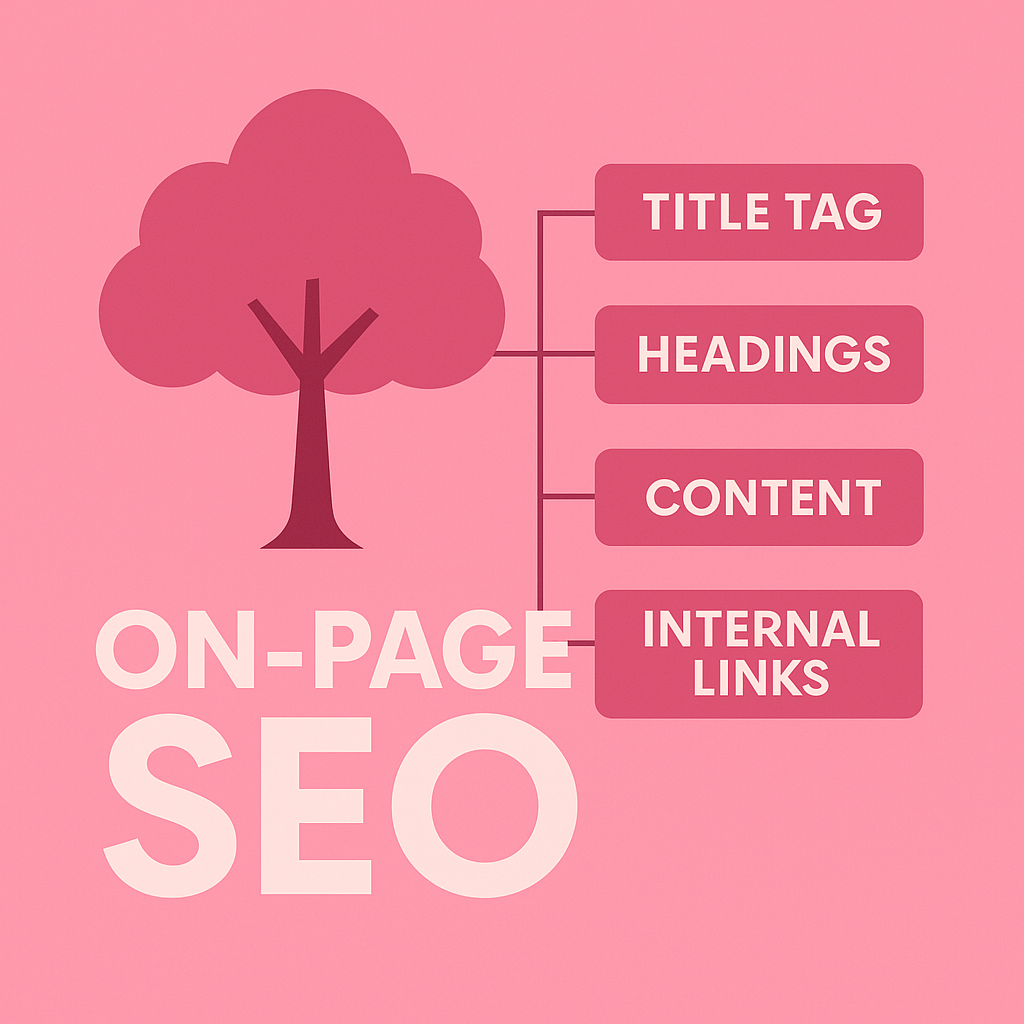
On-page SEO focuses on optimizing individual web pages to improve their search engine rankings. It includes elements like title tags, meta descriptions, headers, and keyword placement. Proper use of on-page SEO ensures better visibility and user experience. This strategy helps search engines understand your content more effectively.
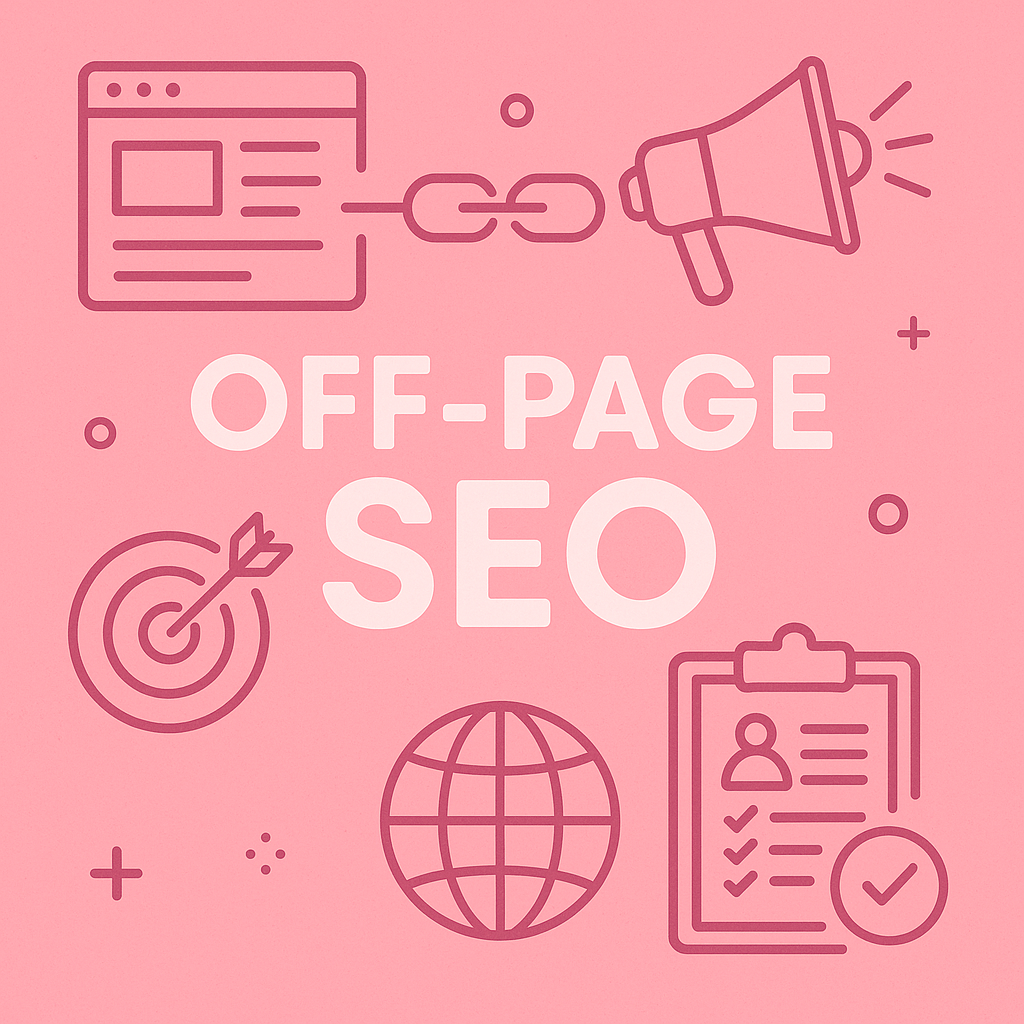
Off-page SEO involves activities outside your website to boost its search engine ranking. It includes backlinks, social media marketing, and influencer outreach. These efforts build your site's credibility and authority online. Strong off-page SEO helps drive more traffic and improve overall visibili
Technical SEO focuses on optimizing a website’s infrastructure to help search engines crawl and index it effectively. It includes tasks like improving site speed, mobile-friendliness, XML sitemaps, and fixing crawl errors. A well-structured site enhances user experience and boosts ranking potential. Technical SEO is the backbone of a strong digital presence.
What Are SEO Keywords?
SEO keywords are specific words or phrases that describe the content of your website and match what people search for on search engines like Google. They help search engines understand your site and determine whether it should appear in search results.
Example:
-
If someone searches “best digital marketing tools 2025”, and your page uses this keyword naturally, your site has a chance to appear at the top of search results.
Why Are SEO Keywords Important?
Increase Website Traffic
Right keywords bring the right audience to your site.
Boost Rankings
Using relevant keywords helps search engines know your topic.
Target Your Audience
Attract users looking for exactly what you offer.
Improve Conversions
People searching for specific products/services are more likely to buy.
Types of SEO Keywords
Here are the main categories
1. Short-Tail Keywords
Length: 1–2 words
Example: “SEO services”
Example: “SEO services”
Cons: High competition, less specific
2. Long-Tail Keywords
Length: 3+ words
Example: “affordable SEO services for small businesses”
Pros: Lower competition, higher conversion rates
Cons: Lower search volume individually, but they add up
3. LSI Keywords (Latent Semantic Indexing)
Definition: Related keywords that add context
Example: For “digital marketing,” LSI keywords include “online marketing,” “social media advertising,” “SEO campaigns.”
Why Important? They help search engines understand the topic deeply
4. Transactional Keywords
Used by people ready to buy
Examples: “buy running shoes online,” “hire SEO expert”
Value: High conversion rate.
5. Informational Keywords
Used by people looking for answers
Examples: “how does SEO work,” “what is affiliate marketing”
Best For: Blog posts, guides, educational content.
6. Local Keywords
Target a location
Examples: “SEO services in Delhi,” “best bakery near me”
Good for: Local businesses wanting nearby customers.
7. Branded Keywords
Include your brand name
Examples: “Nike running shoes,” “HubSpot CRM pricing
Why Important? They bring highly targeted traffic looking for your brand.
How to Find the Right SEO Keywords
1 Use Keyword Research Tools
Google Keyword Planner
SEMrush
Ahrefs
Ubersuggest
AnswerThePublic
2 Analyze Competitors
See what keywords they’re ranking for.
3 Understand Search Intent
Is the user looking to buy (transactional), learn (informational), or find a service (navigational)?
4 Focus on Low Competition & High Volume
Choose keywords with good search volume but not too competitive.
Best Practices for Using Keywords
Place them naturally in titles, headings, meta descriptions, and body text.
Avoid keyword stuffing (overusing keywords).
Use long-tail and LSI keywords for better ranking.
Optimize images with alt text containing keywords.
Keep updating your keyword strategy based on search trends.
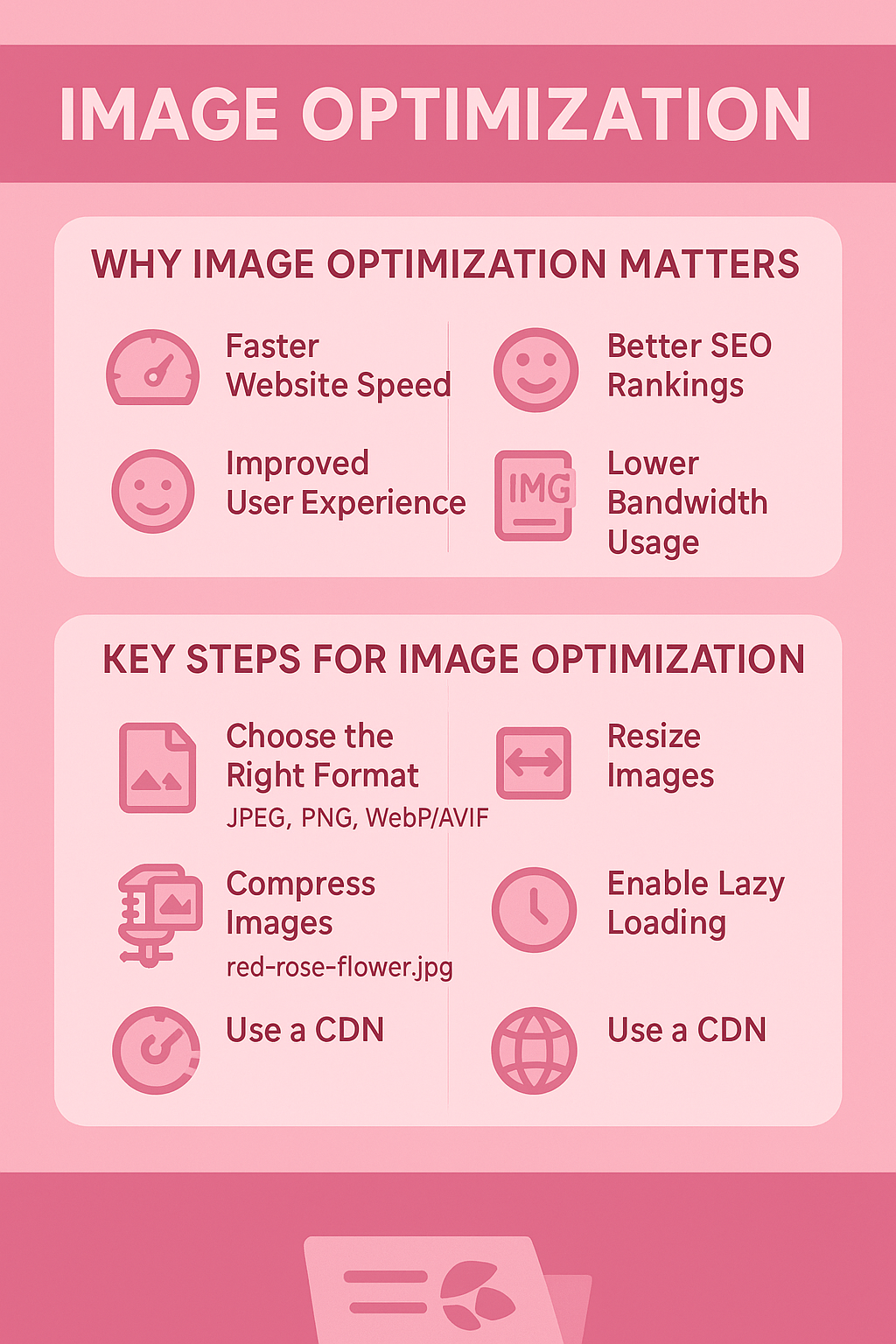
Why Image Optimization Matters:
Faster Website Speed –
Optimized images load quickly, reducing bounce rates.
Better SEO Rankings –
Google favors fast-loading websites.
Improved User Experience –
Visitors stay longer when pages load smoothly.
Lower Bandwidth Usage
Saves storage and reduces server load.
Key Steps for Image Optimization:
1 - Choose the Right Format
JPEG: For photos with many colors.
PNG: For images that need transparency.
WebP/AVIF: Modern formats with smaller size and good quality.
2-Resize Images
Avoid uploading huge images; match the image size to display size.
3- Compress Images
Use tools like TinyPNG, Squoosh, or ImageOptim to reduce file size.
4- Use Descriptive File Names & Alt Text
Helps with SEO and accessibility.
Example: red-rose-flower.jpg instead of IMG1234.jpg.
5- Enable Lazy Loading
Loads images only when they come into view, improving initial page load.
6- Use a CDN (Content Delivery Network)
Distributes your images globally, speeding up delivery.

Meaning of Mete
Mete means to distribute or allot something, typically with a sense of measure or judgment—often used in the phrase “mete out”, as in to mete out justice or punishment
Sample Sentences
1- The committee will mete out rewards to top performers.
2- Severe penalties were meted out to those who broke the rules.
3-(Archaic): Early surveyors would mete the land using simple tools.
4- The property lines were set according to the metes and bounds recorded in the deed.
Summary Table
Part of Speech
Meaning
Common Phrase
Verb
Distribute, allot
mete out punishment
Archaic Verb
Measure
rarely used similarly
Noun (rare)
Boundary or limit
metes and bounds
Off-Page SEO Key Element
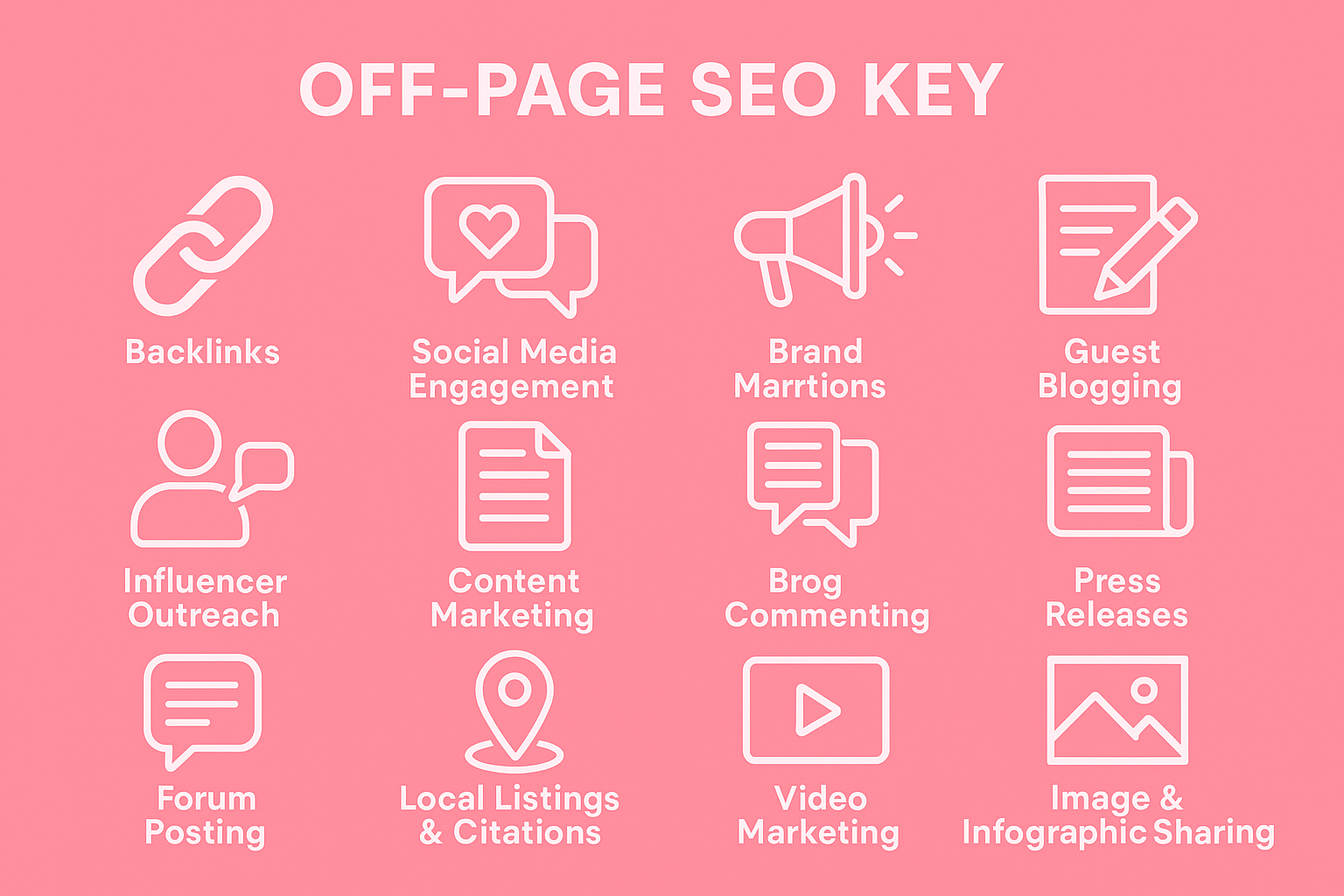
1 -Backlinks (Link Building)
High-quality backlinks from authoritative websites boost your site's credibility.
Focus on do-follow links from relevant sites.
Focus on do-follow links from relevant sites.
2 - Social Media Engagement
Shares, likes, and comments on social platforms increase visibility.
Helps generate indirect traffic and potential backlinks.
3- Brand Mentions (Without Links)
Google now considers unlinked brand mentions as a ranking factor.
Getting your brand name mentioned in articles, forums, or media builds authority.
4 - Influencer Outreach
Collaborating with influencers can drive traffic and earn backlinks
Useful for product reviews, giveaways, or featured content.
5 - Content Marketing
Publish high-quality, shareable content like infographics, videos, and blogs.
The more shareable, the more chances to earn backlinks.
6 - Guest Blogging
Write valuable content for other websites in your niche.
It helps build backlinks and brand reputation
7 - Forum Posting
Participate in niche-related forums like Reddit or Quora
Share insights with links back to your site (where relevant and permitted).
8 - Local Listings & Citations
Submit your business to directories like Google My Business, Yelp, Bing Places.
Ensure Name, Address, and Phone (NAP) consistency.
9 - Press Releases
Distribute press releases through PR sites to gain brand exposure and backlinks.
10 - Blog Commenting
Comment on industry-relevant blogs with valuable input
Can help generate traffic and no-follow links (less SEO value but good for engagement)
11 - Video Marketing
Share videos on platforms like YouTube or Vimeo
Add links in video descriptions
12 - Image & Infographic Sharing
Use platforms like Pinterest, Flickr, or Infogram to share visuals
Include website links in descriptions.
Importance of Off-Page SEO
1️⃣ Improves search engine rankings through quality backlinks.
2️⃣ Builds domain authority and online credibility
3️⃣ Increases organic traffic without paid ads.
4️⃣ Enhances brand awareness across platforms.
5️⃣ Creates powerful and trustworthy backlinks
6️⃣ Boosts social media engagement and shares.
7️⃣ Helps improve visibility in local search results
8️⃣ Builds user trust with mentions and reviews.
9️⃣ Drives referral traffic from external sites
🔟 Offers long-term SEO value and ranking stability
Technical SEO: Website Speed Matters
Website speed is a crucial part of technical SEO that directly affects both user experience and search engine rankings. A fast-loading website ensures that visitors stay longer, interact more, and are less likely to leave due to slow performance. Search engines like Google consider page speed as a ranking factor, especially for mobile users. Optimizing your website's speed involves several technical strategies, such as compressing images, minimizing CSS and JavaScript, enabling browser caching, and using a Content Delivery Network (CDN) to serve content faster across different locations. Additionally, improving server response times and choosing high-quality hosting services can significantly enhance your site’s loading performance. A faster website not only ranks better in search results but also helps increase conversions and user satisfaction.
secure connection (HTTPS
A secure connection (HTTPS) is a vital component of technical SEO that ensures your website is safe for users. It encrypts data transferred between the user’s browser and your website, protecting sensitive information from being intercepted. Google considers HTTPS a ranking factor, which means secure websites are more likely to rank higher in search results. An SSL certificate is required to enable HTTPS, and having it installed not only boosts SEO but also builds trust with your visitors—especially on e-commerce or login-based websites. Browsers also mark non-secure sites with a warning, which can discourage users from continuing. By securing your website, you improve credibility, user confidence, and search engine performance.
Sitemap in Technical SEO:
A sitemap is a critical element of technical SEO that helps search engines discover and index all the important pages on your website. It acts like a roadmap, guiding search engine crawlers through your site’s structure to ensure nothing is missed—especially new or updated content. A sitemap is typically an XML file that lists URLs along with metadata like the last update date and page priority. Submitting your sitemap to tools like Google Search Console improves crawl efficiency and helps your site appear in search results faster. Without a proper sitemap, some pages might remain unnoticed by search engines, affecting your site’s visibility and performance in rankings.
The importance of a sitemap in technical SEO
The importance of a sitemap in technical SEO lies in its ability to improve how search engines crawl and index your website. A well-structured sitemap ensures that all key pages—especially new, deep, or updated ones—are discoverable by search engine bots. This is particularly valuable for large websites, e-commerce stores, or sites with complex navigation. By submitting your sitemap to tools like Google Search Console, you help search engines prioritize and understand your site structure better. This can lead to faster indexing, improved visibility, and higher rankings in search results. In short, a sitemap enhances your site’s SEO efficiency and supports better performance across all search engines.

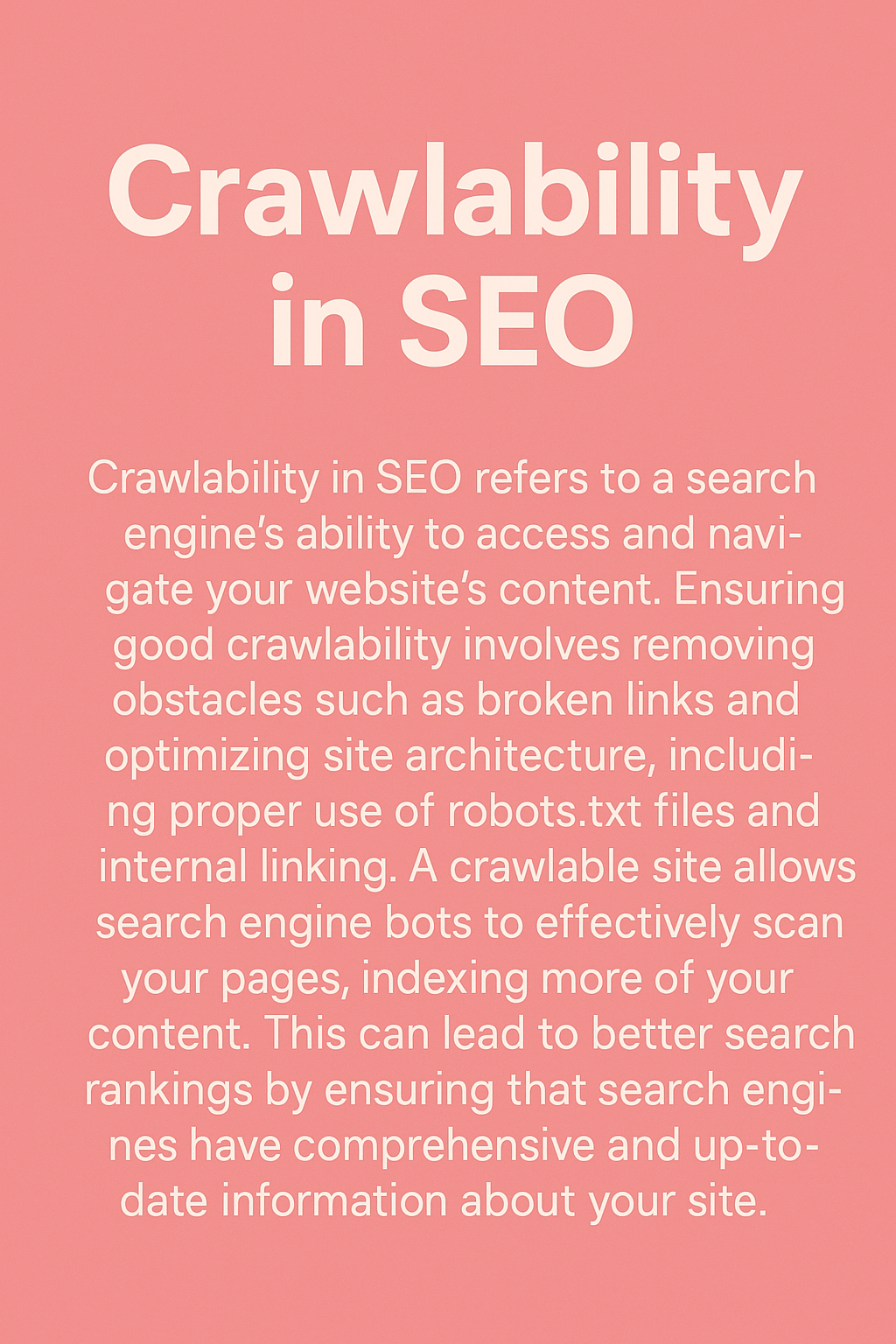
Things That Help Crawlability
1- Things That Help Crawlability
2- Use a Clean URL Structure
Helps search engines easily find and index your site’s pages
Short, descriptive URLs are easier for bots to follow and index.
3-Fix Broken Links
4- Optimize Robots.txt File
Dead links block crawlers and disrupt user experience.
Allow search engines to access important pages, and block only irrelevant ones.
5- Improve Internal Linking
6- Avoid Duplicate Content
Proper linking structure guides bots through your website effectively
Unique content prevents confusion and wasted crawl budget.
7 - Use Canonical Tags Properly
8 - Reduce Page Load Time
Helps search engines understand the main version of a page
Fast-loading pages are more likely to be fully crawled.
9 - Mobile-Friendly Design
10- Update Content Regularly
Responsive sites are prioritized by mobile-first indexing.
Fresh content attracts crawlers to revisit your pages. Would you like this list turned into a pink-themed image as
indexting
Indexing in SEO is the process by which search engines like Google store and organize content found on the web. After a search engine crawls your website, it decides whether your pages are useful and relevant enough to be added to its index—a massive database of web pages. Only indexed pages can appear in search engine results. Proper indexing ensures that your content is discoverable by users through search queries. To improve indexing, it's important to submit an XML sitemap, use internal linking, create high-quality content, and avoid duplicate or blocked pages. Without indexing, even the best content won’t show up in search results, making it invisible to your target audience.

404 ERROR
Oops! The page you're looking for doesn't exist.
It might have been removed or renamed, or the URL may be incorrect.
What can you do?
🔙 Go back to the previous page
🏠 Visit the Homepage
🔍 Search for what you need
📬 Contact Support if the problem continues
how it affect your website
A 404 error occurs when a user tries to visit a page on your website that no longer exists or was never there. This can significantly affect your website's performance. First, it creates a poor user experience, causing frustration and leading visitors to leave your site quickly, which increases your bounce rate. Second, if search engines like Google find many 404 errors on your site, it can signal that your website is poorly maintained, which may result in lower search rankings. Additionally, when valuable pages with backlinks turn into 404s, you lose the SEO value (link juice) those links provided. Too many 404 pages can also waste your crawl budget, meaning search engines may ignore important content. Therefore, regularly checking for and fixing broken links is crucial for maintaining both SEO health and user trust.
1- What are the main branches of SEO (Search Engine Optimization)?
Answer:
-
Technical SEO: Optimizes site infrastructure (speed, mobile-friendliness, and crawlability).
-
On-Page SEO: Focuses on content, keywords, and HTML tags (title, meta).
-
Off-Page SEO: Builds authority through backlinks, social signals, and brand mentions.
2: How do Technical SEO, On-Page SEO, and Off-Page SEO work together like branches of a tree
Answer:
-
Roots (technical SEO) ensure the website is healthy and crawlable.
-
Trunk (On-Page SEO) supports strong content and keyword relevance.
-
Leaves and branches (off-page SEO) bring visibility, traffic, and authority.
3 - What happens if one branch of the SEO tree is weak or missing?
Answer:
-
A tree with weak roots (bad technical SEO) may die—search engines can't access it.
-
Without good content (on-page SEO), users and Google won’t find value.
-
Lacking Off-Page SEO means no authority—your pages won't rank well